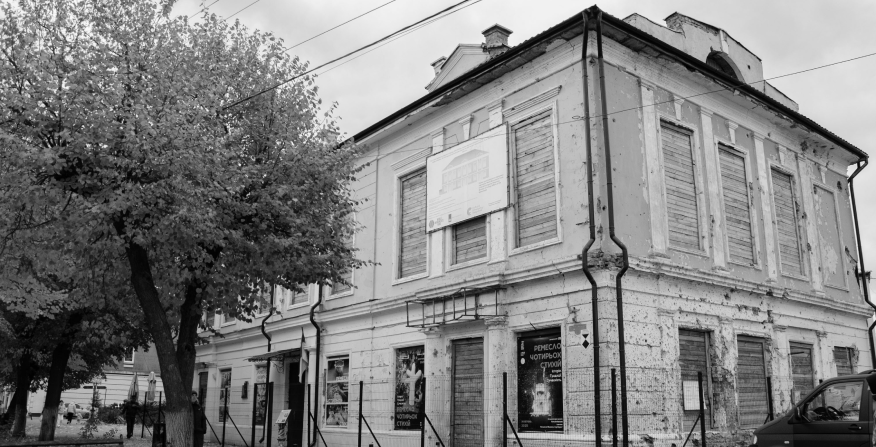
Okhtyrka City Local History Museum
Monument of local significance
Historical references:
Built in the late 19th – early 20th century, the building is an example of provincial civic architecture. Combining elements of Neoclassicism and late Historicism, it features symmetrical proportions, decorative cornices, and arched window openings. Originally constructed as a private residence, it later housed municipal institutions and, since 1920, has served as the city’s museum of local history.
Damage:
Most of the building’s roof has been damaged:
- All windows have been shattered
- Doors were torn out
- Interior ceilings, walls, and floors sustained significant damage
- Heating, drainage, water supply, and electrical systems were heavily affected
Restoration Progress:
Emergency stabilization measures have been undertaken.
Location:
Okhtyrka, Sumy Region
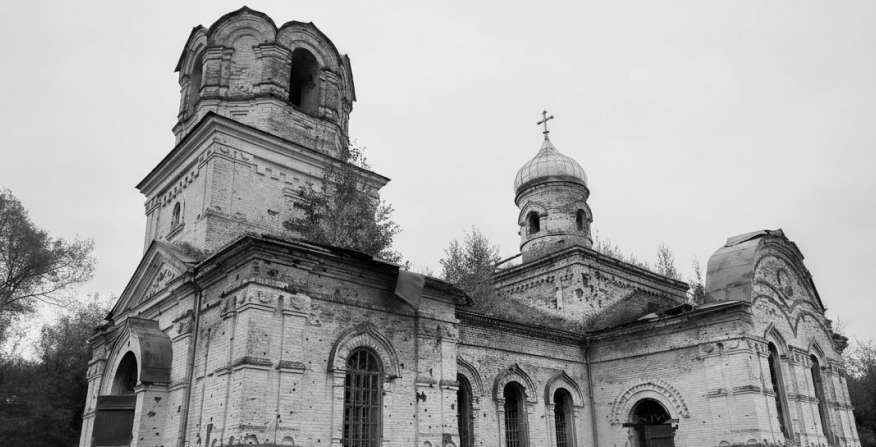
Resurrection Church
Monument of local significance
Historical references:
Built in 1913 in the Diocesan architectural style on the site of an earlier wooden church from 1781. The cross-shaped brick church features a two-tier bell tower above the entrance.
Damage:
The interior decoration has been completely destroyed:
- Doors and windows are destroyed
- The roof is partially destroyed
- One dome is missing
- Walls are damaged
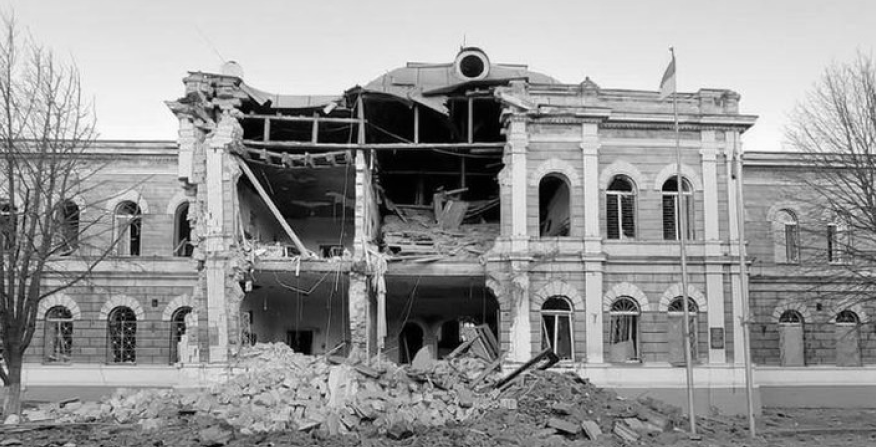
Mariinska Gymnasium
Monument of Local Significance
Historical references:
Founded in 1863, the building evolved through several educational institutions before receiving its current status in 2003. The 1892 building, designed by architect Yevhen Shtukenberg in a blend of Renaissance and Art Nouveau styles.
Damage:
The building is partially destroyed.
Restoration Progress:
Conservation measures have not been carried out by the owner.
Location:
Mykolaiv,
Mykolaiv Region
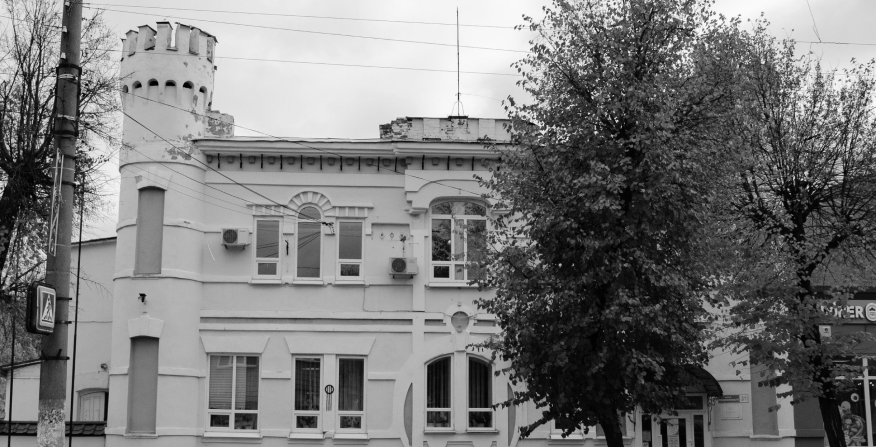
Power Station Building
Monument of local significance
Historical references:
One of the first electric power facilities in the Sumy region, built in 1903 for the Merchant Joint-Stock Company.The construction marked the early stage of urban electrification in northeastern Ukraine, preceding similar developments in Hlukhiv, Romny, and Konotop in the 1910s.
Damage:
Windows and roof damaged
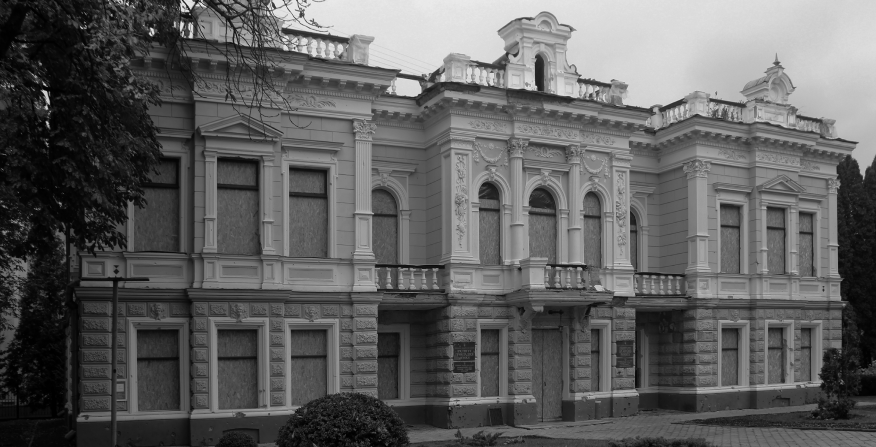
Sumovsky Estate: Main Building
Monument of local significance
Historical references:
Built in 1895 for sugar manufacturer Mykhailo Sukhanov. The two-storey brick house, combining Palladian symmetry with Neo-Baroque décor, features deep risalits, balconies, and ornate stucco details. Since 1991, it has housed the Institute of Applied Physics of the National Academy of Sciences of Ukraine.
Damage:
As a result of a blast wave from a missile strike:
- The roof covering was damaged and partially missing
- Structural elements of the roof were affected
- Cracks appeared on the walls
- Windows and doors were shattered
- Decorative finishes and façade ornamentation were damaged or destroyed
- Interior decorative elements and finishes were also damaged or destroyed
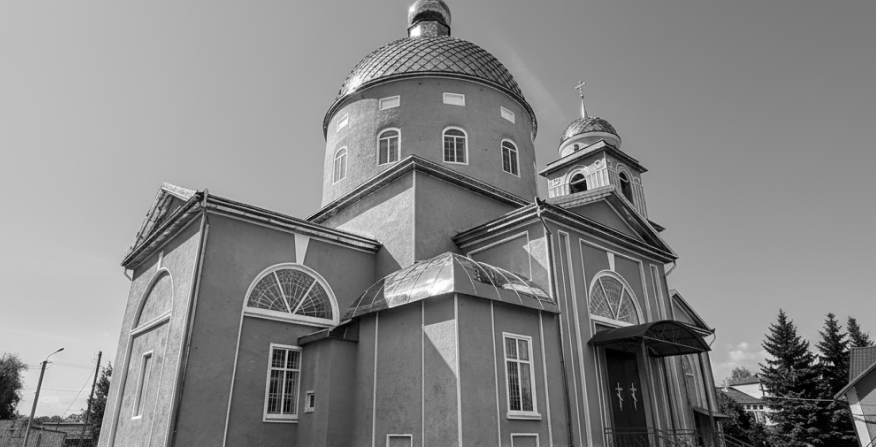
Church of the Nativity of the Virgin Mary
Monument of local significance
Historical references:
A landmark of late Classicist architecture, built in 1838 to replace a 17th-century wooden church. Designed by Fedor Danylov, it features a bell tower, a single dome, and four altars, the main one dedicated to the Virgin Mary. The church preserved rare printed relics, including a Gospel (1644) and Homilies of John Chrysostom (1624).
Damage:
Severe damage to the load-bearing structures of the exterior and interior walls, partial damage to the façade and window frames
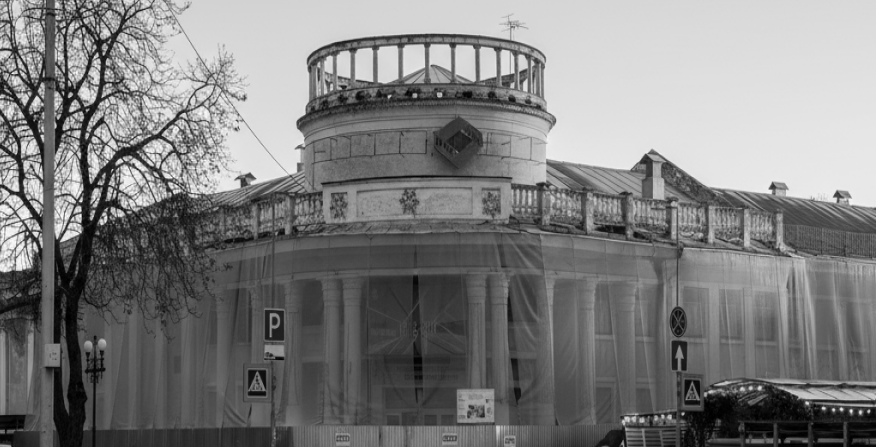
Chernihiv Regional Youth Center
Monument of local significance
Historical references:
Built in 1939 as the Shchors Cinema to the design of Petro Savych and later reconstructed in 1947 after wartime destruction. The two-storey brick building, forming part of the architectural ensemble of the square, features a rounded corner façade with a ten-column portico and classical detailing.
Damage:
The foundation, walls, and roof of the red hall have been destroyed:
- Courtyard façade walls are damaged and cracked
- Wooden windows are destroyed
- Entrance and emergency exit doors are destroyed
- Interior walls have developed cracks
Restoration Progress:
Conservation work has been carried out on part of the premises.
Location:
Chernihiv, Chernihiv region