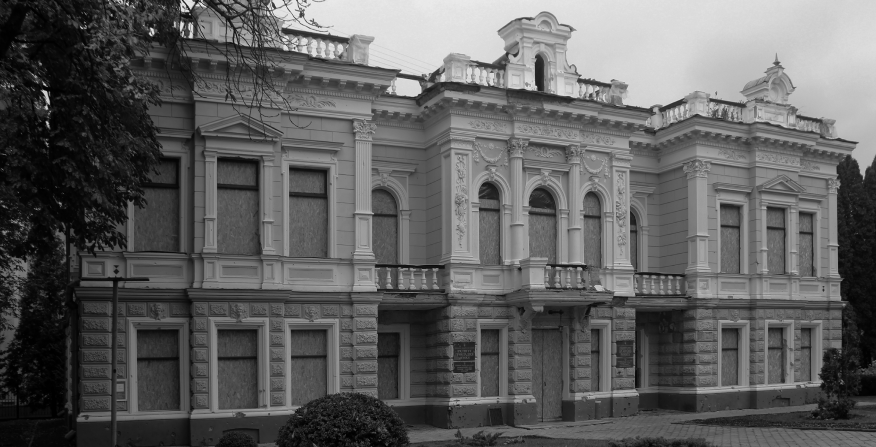
Okhtyrka City Local History Museum
Monument of local significance
Historical references:
Built in the late 19th – early 20th century, the building is an example of provincial civic architecture. Combining elements of Neoclassicism and late Historicism, it features symmetrical proportions, decorative cornices, and arched window openings. Originally constructed as a private residence, it later housed municipal institutions and, since 1920, has served as the city’s museum of local history.
Damage:
Most of the building’s roof has been damaged:
- All windows have been shattered
- Doors were torn out
- Interior ceilings, walls, and floors sustained significant damage
- Heating, drainage, water supply, and electrical systems were heavily affected
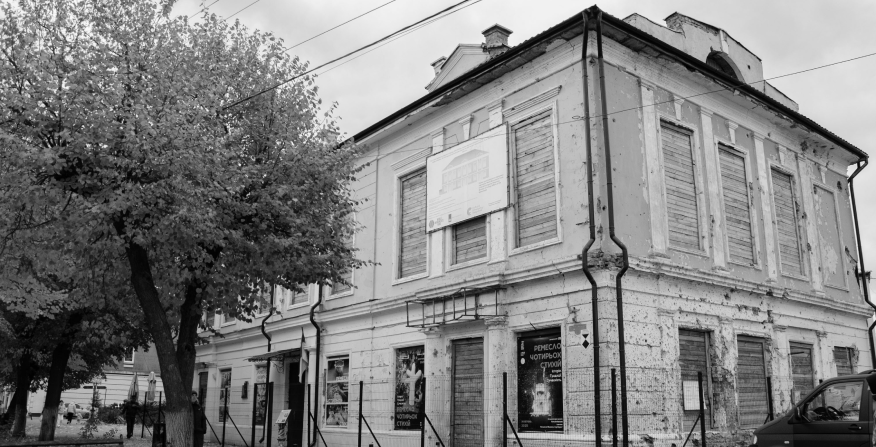
Restoration Progress:
Emergency stabilization measures have been undertaken.
Location:
Okhtyrka, Sumy Region
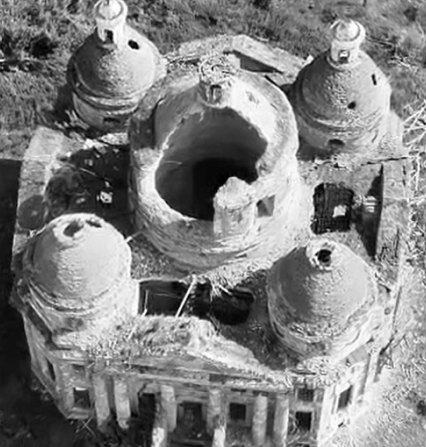
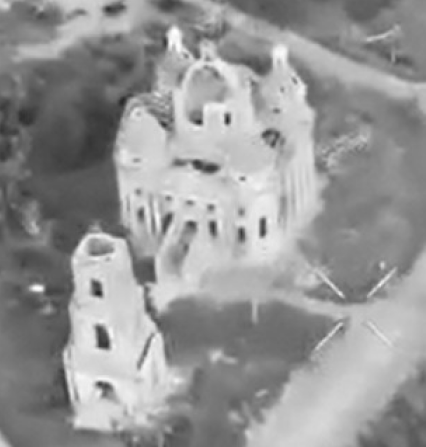
Mykolaiv Church (Church of the Nativity of the Virgin Mary)
Monument of national significance
Historical references:
Built in 1800 with donations from local merchants and designed in the Classical style, the cathedral stands in Mykolaiv’s historic centre. Over the centuries, it has undergone several reconstructions and served various purposes, including as a garrison officers’ house during the Soviet era. Restored to the Church in 1992, it remains an active cathedral and one of Mykolaiv’s most significant religious and architectural landmarks.
Damage:
Destruction of domes and drum
Power Station Building
Monument of local significance
Historical references:
One of the first electric power facilities in the Sumy region, built in 1903 for the Merchant Joint-Stock Company.The construction marked the early stage of urban electrification in northeastern Ukraine, preceding similar developments in Hlukhiv, Romny, and Konotop in the 1910s.
Damage:
Windows and roof damaged
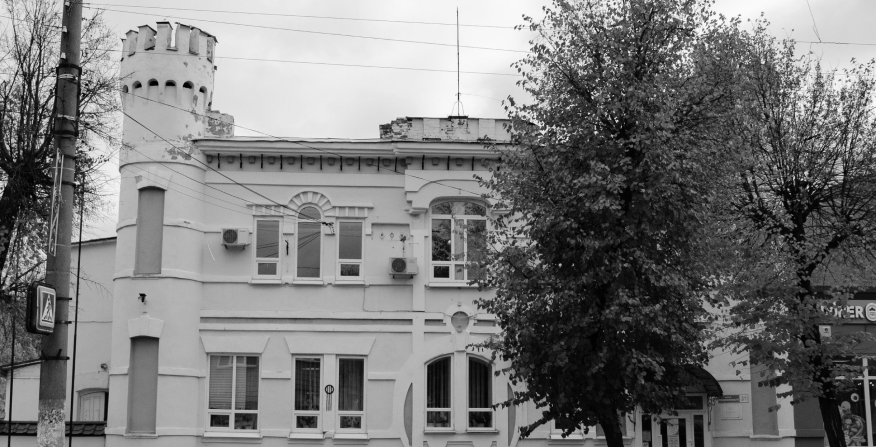
Sumovsky Estate: Main Building
Monument of local significance
Historical references:
Built in 1895 for sugar manufacturer Mykhailo Sukhanov. The two-storey brick house, combining Palladian symmetry with Neo-Baroque décor, features deep risalits, balconies, and ornate stucco details. Since 1991, it has housed the Institute of Applied Physics of the National Academy of Sciences of Ukraine.
Damage:
As a result of a blast wave from a missile strike:
- The roof covering was damaged and partially missing
- Structural elements of the roof were affected
- Cracks appeared on the walls
- Windows and doors were shattered
- Decorative finishes and façade ornamentation were damaged or destroyed
- Interior decorative elements and finishes were also damaged or destroyed